In modern retail, production environments, and logistics operations, reliable tag encoding and controlled read zones are critical to the integrity of an RFID deployment. While handheld readers provide mobility, many workflows demand a fixed, compact, and controlled desktop system, especially for tag issuance, POS integration, item-level verification, and anti-counterfeit authentication.
Poorly tuned desktop readers, however, can result in unstable read performance: multiple unintended tag reads, long command latency, false positives, or low read rates under dense tag environments. This disrupts serialization flow, affects item traceability, and directly impacts total system ROI.
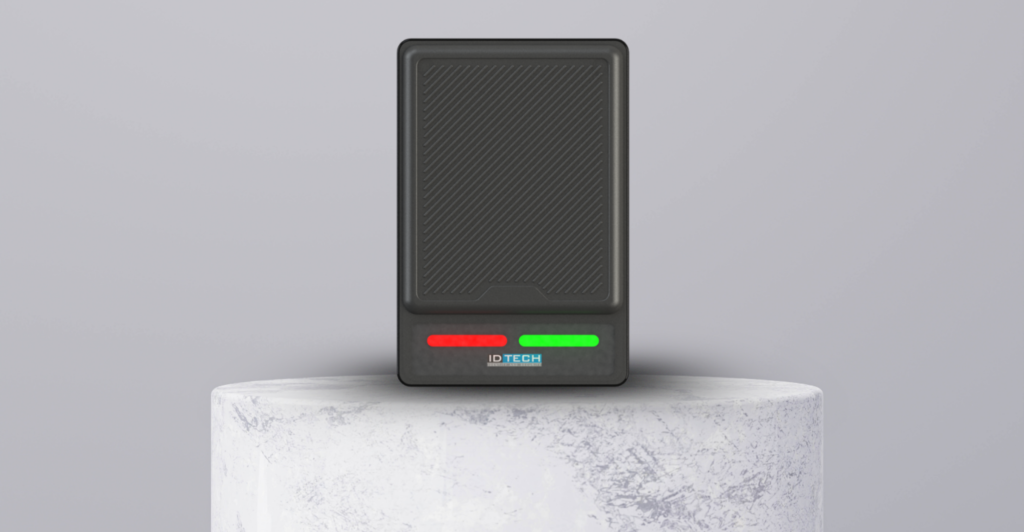
The IDT-107 UHF RFID Desktop Reader/Writer addresses these challenges with a fully proprietary RF architecture built on independent intellectual property. A dedicated signal-processing algorithm enhances read accuracy, supports multi-tag decoding, and ensures collision-resistant performance, critical when tags are closely stacked or encoded at scale. With plug-and-play USB integration, integrated LED/buzzer status feedback, and a small footprint, it offers a controlled desktop encoding environment for enterprise operations that demand accuracy, consistency, and low operator effort.
Why choose the IDT-107 UHF RFID Desktop Reader?
A correctly engineered desktop reader ensures fast encoding, reduces manual intervention, and lowers operational errors. The IDT-107 is designed for tasks that require precise read distance, clear feedback signals, and a stable working zone:
- Short read range (≤50 cm) provides controlled tag identification—ideal for single-item operations
- Collision-resistant algorithms enable multi-tag encode/read without data loss
- Compact form factor supports deployment on counters, desks, or industrial benches
- USB interface ensures fast integration with PCs, enterprise terminals, and kiosks
- LED + Buzzer provide immediate operator confirmation during encoding cycles
This makes IDT-107 well-suited for retail POS tagging, line-side encoding stations, production control workflows, and authentication desks where stable performance matters more than long range.
Key Features at a Glance
- Compact desktop reader/writer engineered for item-level RFID operations
- Proprietary signal processing for fast, accurate tag reading and writing
- Multi-tag read/write support with collision-resistant decoding
- Short read distance ≤50 cm for controlled scanning zones
- USB connectivity for direct PC integration
- Integrated LED & buzzer for instant visual and audio feedback
Typical Applications
Retail POS & Inventory Encoding
For point-of-sale and SKU tagging workflows where operators encode labels, verify EPCs, and ensure item traceability. A limited read zone reduces stray reads from adjacent inventory.
Item Tracking & Production Control
On production lines where serialized RFID tagging is part of WIP control and each unit must be encoded with accurate, traceable EPC data.
Anti-Counterfeiting & Authentication Desks
For brand-protection, authenticity testing, warranty validation, and controlled customer returns—where batch scanning can cause incorrect matches.
Logistics & Asset Management
On logistics desks, repair counters, or RMA stations where specific assets are checked-in/out and must be identified without interference from surrounding tagged items.
As RFID deployments scale towards item-level traceability, controlled encoding stations are fundamental for ensuring EPC quality, preventing duplicate IDs, and reducing system errors. If your operations involve frequent tagging, verification, returns processing, or authentication in a desktop environment, moving to a compact reader with fully optimized signal processing provides measurable gains: faster cycle time, fewer encoding errors, reduced operator training, and higher confidence in your data. The IDT-107 reflects deep engineering around signal control, RF tuning, and human-machine interaction, built to support real-world, enterprise-grade RFID adoption across retail, production, and logistics ecosystems.